Supplements People Explore for Long COVID Fatigue
Long COVID fatigue is different from ordinary tiredness. It doesn’t improve with rest. It can make basic activities feel impossible. Many people turn to supplements, hoping to find something that helps. Here’s what research shows about the supplements people are trying and what evidence exists for each.
This is a survey of what’s being studied and what people are using. None of these are proven cures, and results vary significantly from person to person.
What Makes Long COVID Fatigue Different
Long COVID fatigue isn’t just feeling tired. It often involves what researchers call post-exertional malaise—your symptoms get worse after even minor physical or mental activity.
A recent study of nearly 4,000 patients found that 89.7% of people with ME/CFS and 79.4% with long COVID reported post-exertional malaise. The two conditions share remarkably similar symptom profiles.
The underlying mechanisms may involve mitochondrial dysfunction, ongoing inflammation, or disrupted energy metabolism. That’s why many supplements target these pathways.
NAC: The Supplement Doctors Are Actually Prescribing
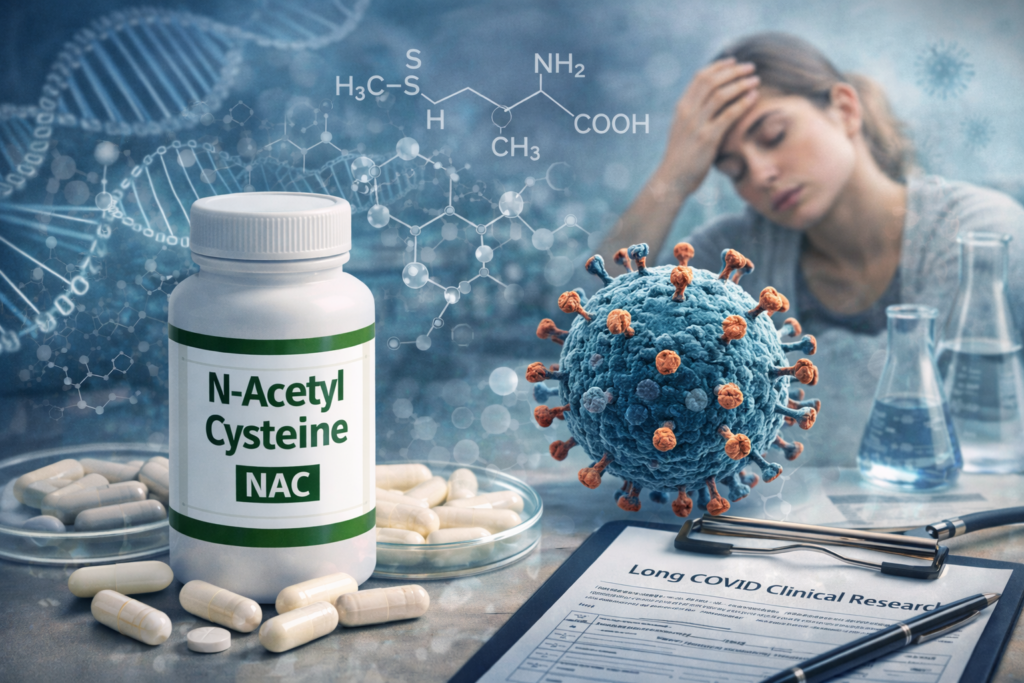
N-acetyl cysteine appears most frequently in clinical discussions about long COVID fatigue. In a large patient survey, 45.8% of people taking NAC at doses above 600 mg daily reported positive effects.
Doctors at Yale are using NAC combined with guanfacine for patients with cognitive symptoms. Many of their patients with brain fog and fatigue have responded well to this combination.
NAC helps the body produce glutathione, which is often depleted in long COVID. It also has direct antioxidant effects. Typical doses range from 600 to 1,200 mg daily.
The supplement can cause nausea and has a sulfur smell some people find unpleasant. It interacts with blood thinners and nitroglycerin.
Acetyl-L-Carnitine: Energy Metabolism Support
Patient surveys show that 41.7% of people taking acetyl-L-carnitine at 500 mg or higher reported benefits. This was one of the higher response rates among commonly used supplements.
A case-control study tested acetyl-L-carnitine at 500 mg combined with physical rehabilitation. The group receiving both the supplement and exercise showed better improvements in pain, breathing, functional capacity, and quality of life compared to exercise alone.
Carnitine helps transport fatty acids into mitochondria for energy production. Research suggests it may help with the muscle weakness and fatigue that persists after viral infections.
Studies in chronic fatigue syndrome and depression have shown that acetyl-L-carnitine can cross the blood-brain barrier, which may explain why some people report both physical and mental fatigue improvements.
Doses in studies typically range from 500 to 2,000 mg daily. The supplement is generally well-tolerated, though some people experience digestive upset.
Nicotinamide Riboside: Mixed Results from a Rigorous Trial
Massachusetts General Hospital ran a 24-week trial of nicotinamide riboside, a form of vitamin B3 that boosts NAD+ levels. NAD+ is essential for cellular energy production and may be disrupted by COVID.
Participants took 2,000 mg of NR daily for up to 20 weeks. The trial was randomized and placebo-controlled—a higher quality design than most supplement studies.
Results were genuinely mixed. Overall group differences were limited, but many individuals showed encouraging improvements in fatigue, sleep, and mood after at least 10 weeks. The researchers noted that NAD+ boosting may help some people but isn’t universal.
This is actually valuable information. A negative or mixed trial tells us something important—not everyone responds, and we need to figure out who might benefit.
Creatine: Brain and Muscle Energy
A small German study found that creatine supplementation improved fatigue symptoms, including concentration and mental clarity, in people with long COVID over a three to six month period.
The study involved only 12 participants and lacked a placebo group, so results need confirmation. But creatine has extensive research in other contexts and a well-established safety profile.
Creatine helps cells produce energy quickly. The brain uses enormous amounts of energy, which is why creatine may help with both physical fatigue and brain fog.
Standard doses are 3-5 grams daily. Side effects are typically mild—mainly digestive issues. People with kidney disease should avoid it or use it only under medical supervision.
Omega-3 Fatty Acids: Anti-Inflammatory Effects
Omega-3 supplements providing EPA have been associated with faster recovery and reduced inflammation in some studies. However, the effects on fatigue specifically are less clear than the effects on mood and inflammation.
A large retrospective study found omega-3 supplementation associated with reduced depression and anxiety following COVID, but didn’t show significant differences in fatigue or cognitive symptoms.
Omega-3s have strong general health research. Whether they specifically help long COVID fatigue remains uncertain, but their anti-inflammatory properties make biological sense.
Typical doses are 1-3 grams of combined EPA and DHA daily. Fish oil can interact with blood thinners and cause digestive issues in some people.
CoQ10: Energy Production and Antioxidant Function
Coenzyme Q10 is involved in mitochondrial energy production. An Italian study found that 200 mg of CoQ10 combined with alpha lipoic acid improved fatigue in over half of participants with chronic COVID syndrome.
However, a more rigorous placebo-controlled trial using 500 mg of CoQ10 alone found no significant benefit. The difference might be due to the combination with alpha lipoic acid, dose, or study design.
CoQ10 has a good safety profile and is well-tolerated at doses up to 1,200 mg daily. The main interaction is with blood thinners like warfarin.
Vitamin D: Deficiency Correction Matters
Studies show that maintaining optimal vitamin D levels may support immune regulation during recovery from COVID. Some trials found that vitamin D3 supplementation reduced symptoms and improved markers related to inflammation.
However, not all studies agree on whether vitamin D specifically helps fatigue when you’re not deficient. What’s clear is that deficiency should be corrected.
Get your level checked. If it’s low, supplementing makes sense regardless of whether it helps fatigue. Typical doses are 1,000-2,000 IU daily, though deficiency may require higher amounts temporarily under medical supervision.
B Vitamins: Energy Metabolism Cofactors
Studies are examining B vitamins, particularly B1 (thiamine), B6, B12, and folic acid, for their role in energy metabolism and nervous system function after COVID.
One pilot study looked at a combination supplement containing vitamin C, acetyl-L-carnitine, hydroxytyrosol, thiamine, B6, folic acid, vitamin D3, and B12. Participants reported improvements in perceived physical and mental status.
The challenge with combination studies is you can’t tell which ingredients are actually helping. B vitamins are water-soluble and generally safe, so correcting any deficiencies makes sense.
Combination Formulas: The Challenge of Attribution
One study tested a multi-ingredient formula for long COVID symptoms. Participants showed statistically significant improvements in all tested symptoms, including fatigue and brain fog, after just two to four weeks.
However, the study had no placebo group. Participants had tried numerous other products for 3-20 months without success before this trial, which suggests the effect might be real. But we can’t be certain.
Another double-blind, placebo-controlled trial tested a formula with Echinacea, rosehip, propolis, royal jelly, and zinc. After two months, the supplement group showed reduced inflammatory markers and improved fatigue scores compared to placebo.
The problem with combination formulas is you don’t know which ingredients matter. They might work synergistically. Or one ingredient might be doing the heavy lifting while others are along for the ride.
Probiotics: The Gut-Fatigue Connection
An Italian trial tested a probiotic mix containing Lactobacilli, Bifidobacteria, and Streptococcus thermophilus in 279 long COVID patients. The probiotic group showed significant reductions in fatigue and improvements in quality of life after four weeks.
The gut microbiome is disrupted in many long COVID patients. Restoring healthy gut bacteria might reduce inflammation and improve multiple symptoms, including fatigue.
This area needs more research, but the connection between gut health and systemic symptoms is increasingly recognized.
What Patient Surveys Tell Us
A comprehensive survey of nearly 4,000 ME/CFS and long COVID patients examined over 150 treatments. The supplements with the most positive patient reports were NAC, acetyl-L-carnitine, glutathione injections, and EPA omega-3s.
Patient surveys have limitations—no placebo control, reporting bias, variable dosing. But they reflect real-world experience from thousands of people trying to manage these conditions.
Notably, many neuropsychiatric medications that doctors sometimes prescribe had over 20% of patients responding negatively. This doesn’t mean they never work, but it highlights that pharmaceutical interventions aren’t necessarily better than supplements for everyone.
What Doesn’t Have Good Evidence
Many supplements are marketed for long COVID fatigue without solid research. Curcumin, ginkgo biloba, and various proprietary blends often lack rigorous testing specific to this condition.
Some may have general health benefits or theoretical mechanisms. But theory doesn’t equal proof, and general health benefits don’t necessarily translate to long COVID fatigue relief.
Be especially skeptical of heavily marketed products with celebrity endorsements and minimal peer-reviewed research.
The Importance of Realistic Expectations
Even the supplements with the best evidence only help a subset of people. NAC had a 45.8% positive response rate in patient surveys—that’s actually quite good for this condition. But it also means over half of people didn’t benefit.
The nicotinamide riboside trial showed that some people improved while overall group differences were small. This suggests individual variation matters enormously.
We don’t yet know who’s most likely to respond to which supplements. That’s frustrating but honest.
Addressing Root Causes Alongside Supplements
Supplements work best as part of a broader approach. Sleep quality, stress management, gentle movement as tolerated, and adequate nutrition all affect energy and recovery.
If you’re not sleeping well, no supplement will fully compensate. If you’re pushing through fatigue repeatedly, you may be making post-exertional malaise worse.
Some people with long COVID have specific nutritional deficiencies—iron, vitamin D, B12. Correcting actual deficiencies is straightforward and evidence-based.
Safety Considerations
Even generally safe supplements can cause problems in certain situations or combinations.
NAC, omega-3s, and CoQ10 can all affect blood clotting. If you take anticoagulants, you need medical supervision when adding these.
High-dose B vitamins can cause nerve issues. Creatine affects kidney function. Probiotics can occasionally cause infections in immunocompromised people.
Combination formulas multiply potential interactions. Tell your doctor about everything you’re taking, and bring bottles to appointments.
How to Approach Trying Supplements
If you decide to try a supplement, introduce one at a time. Wait at least several weeks before adding another. This way you can tell what’s actually helping.
Track specific symptoms—hours of activity before fatigue worsens, recovery time needed, ability to complete tasks. Don’t rely on general impressions.
Give supplements adequate trials—usually 8-12 weeks. Some take time to build up in your system or produce noticeable effects.
Be willing to stop if something isn’t helping. There’s no point continuing just because it worked for someone else or you already bought a three-month supply.
Quality Matters
Supplements aren’t regulated like medications. Quality varies significantly between brands.
Look for third-party testing from USP, NSF, or ConsumerLab. This verifies that products contain what they claim and are free from contaminants.
Store supplements according to label directions. Some degrade with heat or light exposure.
The Bottom Line
Several supplements show promise for long COVID fatigue based on preliminary research and patient experience. NAC, acetyl-L-carnitine, and nicotinamide riboside have the strongest supporting evidence.
Others like CoQ10, omega-3s, and vitamin D have good general research and plausible mechanisms but less specific evidence for long COVID fatigue.
None are proven cures. Response rates vary from about 40-50% for the better-studied options. Many people try multiple supplements before finding something that helps.
The research is ongoing and incomplete. What we know now will be different from what we know in a few years. That’s both frustrating and reason for cautious hope.
Work with your doctor to rule out other causes of fatigue and to manage any supplement trials safely. If you try supplements, track your response carefully and adjust based on what actually helps you.