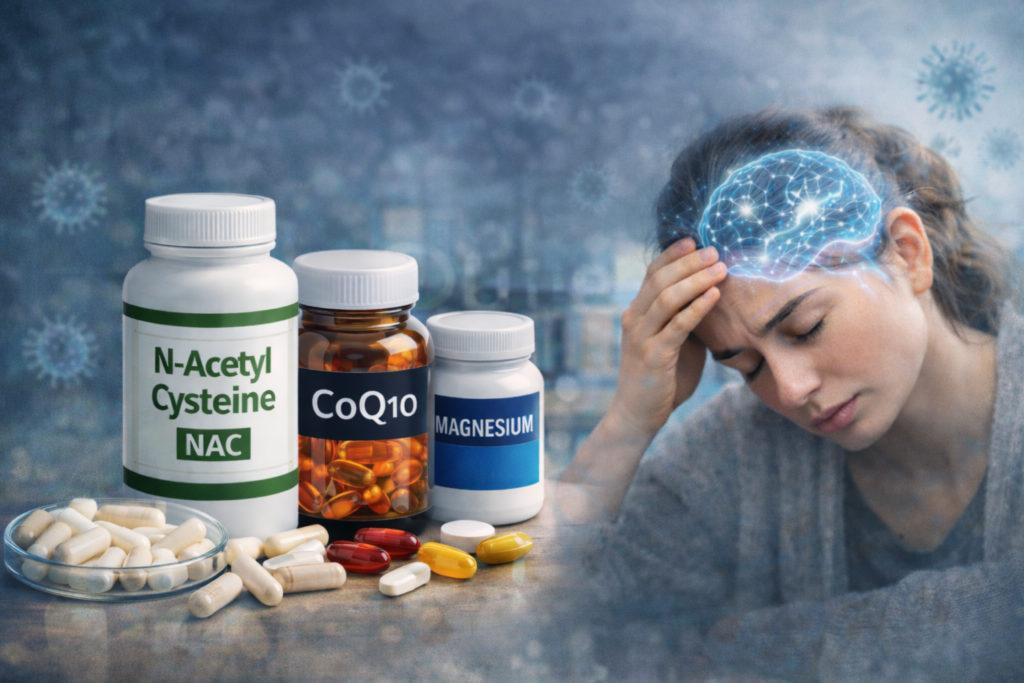

COVID Brain Fog: What Researchers Know So Far
Brain fog after COVID-19 is one of the most commonly reported and frustrating symptoms of long COVID. It affects how you think, focus, and remember. Understanding what researchers have learned about why this happens and what’s actually going on in the brain can help you make sense of what you’re experiencing.
This article walks through current research on COVID brain fog—what it is, how common it is, what scientists think causes it, and what we know about treatment. The science is evolving rapidly, but we’re starting to get clearer answers.
What Brain Fog Actually Means
Brain fog isn’t an official medical diagnosis but rather a colloquial term for a range of significant, persistent neurocognitive impairments. These include sluggish thinking, difficulty processing information, forgetfulness, and an inability to focus.
When people describe brain fog, it’s this idea of feeling sluggish, difficulty thinking or concentrating, and just not feeling as sharp. The term encompasses a few different cognitive problems rather than one specific condition.
People report they used to be amazing at multitasking, but with brain fog they can do only one thing at a time. Others have switched jobs because they could no longer handle the tasks, stress, or thought-load of their previous work.
How Common Is COVID Brain Fog?
A recent study found that around 7% of those who contract COVID-19 experience brain fog. However, rates vary significantly across studies depending on how brain fog is defined and measured.
Nearly half of patients with long COVID report either poor memory or brain fog. It doesn’t just affect patients who were sick enough to need a ventilator or hospital care—it can affect anyone who has been infected with SARS-CoV-2.
Brain fog affected some 67% of 156 patients at a post-COVID clinic in New York, making it one of the most prevalent long COVID symptoms.
The Cognitive Domains Most Affected
Research shows that brain fog associated with COVID is mainly characterized by problems with attention and episodic memory, along with fatigue, which appears to be the main mediator between objective cognitive function and subjective complaints.
When evaluating patients, neurologists look for deficits in language, working memory, declarative memory, motor function, and perception. Executive functioning issues manifest as problems remembering recent events, coming up with names or words, staying focused, and holding onto and manipulating information, as well as slowed processing speed.
A large study in the New England Journal of Medicine found that memory, reasoning, and executive function tasks showed the largest deficits in people with unresolved persistent symptoms after COVID-19.
Brain Fog Affects People Differently Than Test Results Suggest
In a UCSF study, 59% of participants with cognitive symptoms met criteria for HIV-associated neurocognitive disorder, yet 70% of control participants without symptoms also met those criteria. This disconnect highlights that standard cognitive tests may not capture the full picture of what people are experiencing.
Research found that 40% of COVID survivors retrospectively self-reported cognitive impairment (brain fog), while 37% exhibited objective evidence of cognitive impairment on computerized testing. Group-level analyses often show preserved cognitive performance, which may reflect varying compensatory abilities.
This means some people score normally on tests but still struggle with real-world cognitive tasks. Their brains are working harder to achieve the same results.
What Happens in the Brain: Neuroimaging Findings
A Scientific Reports study found that COVID survivors demonstrated significantly lower functional connectivity in multiple brain regions. These regions showed reduced local efficiency and altered effective connectivity, disrupting the pattern of information flow.
The researchers found that the brain can continue functioning at near expected objective levels, but patients experience lowered efficiency as brain fog. The brain is working harder but achieving less.
NIRS data revealed that previously infected students exhibited distinct prefrontal haemodynamic patterns during cognitive engagement, reminiscent of those observed in adults four decades older. This was especially true if they reported experiencing brain fog due to COVID-19.
The AMPA Receptor Discovery
AMPA receptors are essential for learning and memory. The team proposed that people experiencing brain fog show disrupted activity of these receptors. When they compared 30 individuals with long COVID to 80 healthy volunteers, they found a striking and widespread increase in AMPAR density in affected patients.
The imaging approach could distinguish long COVID patients from healthy individuals with 100% sensitivity and 91% specificity. The observed AMPAR overactivity may help explain cognitive symptoms and points to potential treatment targets.
Neuroinflammation: A Key Mechanism
University of Minnesota research found that COVID-19 triggers inflammation in the brain, which is linked to symptoms like fatigue and brain fog. The study found that SARS-CoV-2 infection triggered a neuroinflammatory response, despite the lack of detectable virus in the brain.
The virus impacts several biological pathways in the brain, including overactive or misdirected immune response, disruption to the protective blood-brain barrier, damage to cells lining blood vessels, and impacts to how nerve cells are formed and function.
High concentrations of inflammatory cytokines like interleukin-1β and IL-6 are associated with reduced long-term potentiation in the hippocampus and reduced neurogenesis. Over-expression of IL-6 led to reduced formation of new neurons in the hippocampal dentate gyrus, a finding supported by multiple studies.
The Microglial Activation Problem
NIH research found that after even a mild case of COVID-19, microglia became activated and stayed more reactive even weeks later. Microglia are a type of immune cell in the brain.
When microglia are more reactive, the brain has trouble keeping up with some of its regular tasks, such as making new neurons in the hippocampus, a region that plays an important role in learning and memory.
The research shows that even a mild case of COVID-19 that affects only the respiratory system can cause long-term changes to how brain cells work. This could explain why some people report problems with thinking and memory after COVID-19.
Blood-Brain Barrier Breakdown
Trinity College Dublin researchers showed for the first time that leaky vessels in the brain along with a hyperactive immune system may be key drivers of brain fog in people experiencing long COVID.
The blood-brain barrier normally protects the brain from potentially harmful cells or molecules circulating in the bloodstream. When this barrier becomes “leaky,” it allows substances to enter the brain that shouldn’t be there.
University of Illinois Chicago researchers identified that blood-brain barrier dysfunction leads to immune cell infiltration of the brain, which in turn causes learning and memory problems. When they prevented this breakdown in mice, the animals had less blood-brain barrier leakage and less immune cell infiltration, which led to improvements in learning and memory.
Evidence from Cerebrospinal Fluid
Ten of 13 participants with cognitive symptoms had anomalies in their cerebrospinal fluid. But all four cerebrospinal samples from participants with no post-COVID cognitive symptoms were normal.
This provides objective evidence that something measurable is happening in the nervous system of people experiencing brain fog.
How Long Does Brain Fog Last?
COVID brain fog can last from a few days to a few months. In rare cases, symptoms can continue for over a year after having COVID-19. In most people who report it, brain fog goes away within a few months.
Participants with resolved persistent symptoms had objectively measured cognitive function similar to those who never had COVID-19. This suggests that recovery is possible, even if it takes time.
Who Is Most at Risk?
These risk factors included diabetes and hypertension, which can increase the risk of stroke and vascular dementia; a history of ADHD, which may make the brain more vulnerable to executive functioning issues; and anxiety, depression, a history of heavy alcohol or repeated stimulant use, and learning disabilities.
Older age led to increased neurological inflammation in animal studies, suggesting that age may be a risk factor for more severe cognitive symptoms.
The Yale Treatment Discovery
In 2020, Yale behavioral neurologist Arman Fesharaki-Zadeh discovered that NAC combined with guanfacine could help long COVID patients with brain fog. He realized that one of his long COVID patients was having cognitive symptoms similar to patients with traumatic brain injury suffering from post-concussive syndrome.
NAC was being tested for treatment of TBI and also helped with cognitive deficits. He added guanfacine, which had been used to treat ADHD. They published a small study in November 2023, and now researchers are hoping for funding for larger clinical trials.
Diagnosing Brain Fog
A neurological exam and cognitive testing can identify deficits in a person’s brain function. Tests used to evaluate conditions like dementia can help determine whether a person is experiencing brain fog.
Bloodwork helps rule out other problems like thyroid conditions or vitamin B-12 deficiency that are known to cause cognitive symptoms. Obstructive sleep apnea is another potential cause for cognitive dysfunction and is often diagnosed in people with long COVID.
The Stigma Problem
A psychiatrist noted that she’s seeing stigma surrounding long COVID brain fog where a lot of people aren’t believing that it exists. Patients are frustrated because they have all these symptoms, but there’s not a lab test or imaging to prove what’s going on.
A lot of cognitive issues can make a person feel like it’s all in their head and not real because when you have a cognitive issue, your brain is not working the best it can, so it’s hard to characterize what’s going on. But it is a real thing.
The AMPA receptor findings provide compelling biological evidence that confirms brain fog as a measurable, biological condition. Long COVID brain fog should be recognized as a legitimate clinical condition.
Why Understanding Mechanisms Matters
The concept that many other viral infections that lead to post-viral syndromes might drive blood vessel leakage in the brain is potentially game changing. This could change the understanding and treatment of post-viral neurologic conditions broadly.
Understanding the underlying cause of these conditions will allow development of targeted therapies for patients in the future.
What We Still Don’t Know
Research is ongoing to understand why some people develop brain fog and others don’t. We don’t know yet whether certain interventions can prevent brain fog from developing in the first place.
The relationship between subjective symptoms and objective test results remains complex. Some people score normally on tests but struggle in daily life, while others show deficits on testing but manage reasonably well.
We need larger trials of potential treatments. While the Yale NAC and guanfacine combination shows promise, and the AMPA receptor findings point to potential drug targets, we don’t yet have proven therapies specific to COVID brain fog.
The Bottom Line
COVID brain fog is a real, measurable condition with biological mechanisms researchers are actively uncovering. It’s not psychological or imagined.
Multiple pathways contribute to brain fog, including neuroinflammation, blood-brain barrier breakdown, microglial activation, and AMPA receptor dysfunction. This complexity explains why symptoms vary so much between people.
For most people, brain fog improves over months. Recovery is possible, though the timeline varies. Understanding what’s happening in your brain doesn’t cure it, but it can validate your experience and guide treatment approaches.
The science is evolving rapidly. What we know today is dramatically more than what we knew even a year ago. As research continues, better diagnostics and treatments are likely to emerge.