How Long Does Long COVID Last?
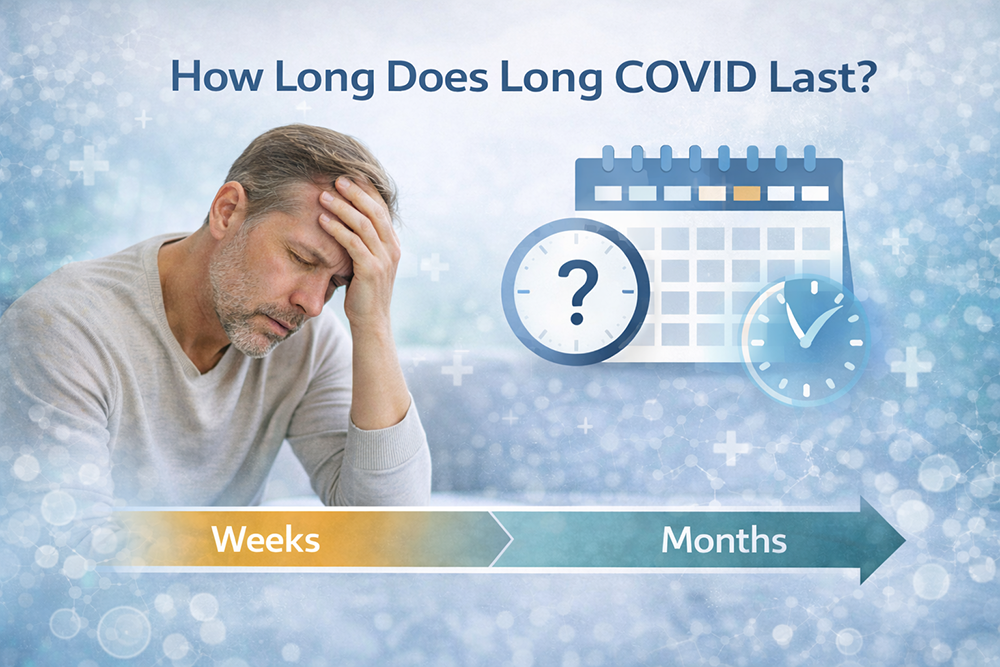
If you’re dealing with long COVID, one of the first questions you probably have is: how long will this last? The honest answer is that it varies significantly from person to person. Some people recover within months, while others experience symptoms for years. Understanding what research shows about recovery timelines can help you know what to expect.
The General Timeline: What Most People Experience
The CDC reports that most people with long COVID symptoms see significant improvement after 3 months, while others may see improvement up to 6 months after symptoms first appear.
Research shows that most people with symptoms at 4 weeks recover by 12 weeks. However, recovery is slower for those still experiencing symptoms at the 12-week mark.
Cleveland Clinic reports that most people with long COVID start to feel better within 12 to 18 months. But this is an average, not a guarantee.
The pattern researchers see is clear: early improvement is common, but the longer symptoms persist, the slower recovery becomes.
Why Recovery Timelines Vary So Widely
Recovery depends on multiple factors. The severity of your initial COVID infection matters. People who experienced more severe COVID-19 illness, especially those who were hospitalized, often face longer recovery.
But severity of acute illness isn’t the whole story. Most people with long COVID actually had mild acute COVID-19. This is simply because many more people have mild COVID than severe COVID, so even if a small percentage develop long-term symptoms, they account for most cases.
Which symptoms you have also influences recovery time. Respiratory symptoms may resolve faster than neurological ones. Fatigue and brain fog often persist longer than shortness of breath or cough.
Age, sex, and underlying health conditions all play roles. Women appear more likely to develop long COVID and may experience longer symptom duration. Older adults and people with pre-existing health problems often face extended recovery.
The First Three Months: The Critical Period
Most people with mild COVID-19 feel better within 1 to 2 weeks and fully recover within 3 months. If you’re going to recover quickly, it usually happens in this timeframe.
According to the British Heart Foundation, symptom duration of other viruses suggests that long COVID symptoms may resolve within 3 months for many people. Fatigue may continue up to 6 months even in those who otherwise recover.
This three-month window appears to be a turning point. People who are still significantly symptomatic at 12 weeks face a different trajectory than those who show improvement in the first few months.
What Happens After Six Months
If symptoms persist beyond six months, you’re dealing with a more complex situation. For many people with long COVID, symptoms resolve on their own within three months, but for others, symptoms can continue well beyond three months and last for years.
A follow-up study in China found that 66% of patients with mild to moderate symptoms still had abnormal CT images at three months post-discharge. Over 90% of patients had abnormal lung findings within three months, associated with reduced lung function.
Recovery doesn’t stop at six months, but it often slows considerably. Improvement may become incremental rather than dramatic.
The Role of ME/CFS in Long-Term Prognosis
Nearly 5 out of 100 people who had COVID-19 meet diagnostic criteria for myalgic encephalomyelitis/chronic fatigue syndrome. Most of these people—nearly 89%—also have long COVID.
This distinction matters because ME/CFS has a very different prognosis than long COVID without ME/CFS.
A study from Charité Berlin tracked patients for up to 20 months. Those with long COVID alone showed gradual improvement in fatigue, pain, concentration problems, and functional ability. Some were even able to return to work.
By contrast, patients who met criteria for ME/CFS saw barely any change in their symptoms over the same period. Only 7 of 55 patients with ME/CFS experienced improvement in their physical impairments.
ME/CFS: When Long COVID May Be Lifelong
Researchers anticipate that many patients will have this disease for their lifetime. This is based on decades of research on ME/CFS, which shows very low recovery rates.
Studies have found that 0-8% of ME/CFS patients recover fully, while 17-64% experience some improvement. The wide range reflects different study designs and patient populations, but the overall picture is one of chronic illness.
This doesn’t mean everyone with persistent long COVID will develop permanent ME/CFS. But it does mean that some people face a chronic, potentially lifelong condition.
Comparing Long COVID to ME/CFS Outcomes
In general, long COVID that doesn’t meet criteria for ME/CFS appears to have a better prognosis than ME/CFS. Many people with long COVID improve over time, particularly in the first year.
The comparison has limitations, though. Long COVID is a new disease, so study participants are newly diagnosed. ME/CFS study participants often have had the condition for years and are less likely to improve.
Recovery can plateau 6-12 months after acute infection for many with long COVID. After that, further improvement may be slow or minimal.
Symptom Fluctuation Over Time
WHO notes that symptoms might persist from the initial illness or develop after recovery. Symptoms can also fluctuate or recur over time.
Symptoms can emerge, persist, resolve, and reemerge over different lengths of time. This makes it hard to know if you’re recovering or just in a temporary good phase.
Some people experience a relapsing-remitting pattern similar to other chronic illnesses. Good days or weeks are followed by setbacks. Recovery isn’t linear.
How Initial Severity Predicts Long-Term Outcomes
Disease severity, functional disability, and duration vary, with severity of acute COVID-19 being a major risk factor for poor functional outcomes. However, poor outcomes can occur even in those with mild initial illness.
People who required intensive care may develop post-intensive care syndrome, which can add to long COVID symptoms and extend recovery time.
Grip strength at the start of illness correlates with symptom persistence. Lower grip strength at onset predicted worse symptoms up to 20 months later, particularly in patients who developed ME/CFS.
Children and Adolescents: Different Timelines
Long COVID is less common in children and adolescents than in adults. Around 16% of children and adolescents develop long COVID following infection.
When it does occur in young people, recovery patterns may differ from adults. Limited data exists on long-term outcomes in pediatric long COVID, partly because the condition is relatively new and children haven’t been followed as long.
Factors That May Influence Recovery
Vaccination status appears to matter. People who aren’t vaccinated against COVID are at higher risk for long COVID if they get infected. Some evidence suggests vaccination may also improve recovery prospects.
One study suggests that taking the antiviral nirmatrelvir (Paxlovid) within five days of a positive COVID test reduces the risk of long COVID. Whether it also improves outcomes in those who already have long COVID is less clear.
Avoiding reinfection may be important. Each time you’re infected with SARS-CoV-2, you have a risk of developing long COVID. Some research suggests risk may increase with repeated infections.
What Improvement Actually Looks Like
Recovery rarely means returning to exactly how you were before COVID. Many people settle into a “new normal” with some persistent limitations but manageable symptoms.
Improvement might mean being able to work part-time instead of being completely disabled. It might mean having energy for basic activities even if intense exercise remains impossible. It might mean brain fog lifting enough to read again, even if complex work tasks are still difficult.
For those with multiple symptoms, some may resolve while others persist. You might recover from shortness of breath but continue experiencing fatigue and brain fog.
Why Some Symptoms Last Longer Than Others
Different symptoms appear to have different recovery trajectories. Fatigue affects 13-87% of long COVID patients, while shortness of breath affects 10-71%, depending on the study and timeframe.
Respiratory symptoms persisted for at least 7 months in 40% of patients, while cough persisted in 20%. Neurological and cognitive symptoms often last longer.
Depression and anxiety levels increase in the first two months after COVID-19 infection, but for most people these return to normal afterward. However, brain fog can last at least two years.
The Uncertainty of Long-Term Prognosis
Because COVID-19 is a new disease, the long-term outlook for people with long COVID is not fully known. We simply haven’t had enough time to follow people for decades.
What we know now is based on following people for months to a few years. Five, ten, or twenty years out, patterns may emerge that we can’t yet see.
This uncertainty is difficult to live with. But it also means that current prognoses may improve as treatments develop and understanding grows.
What This Means for You
If you’re in the first few months of long COVID, there’s a reasonable chance you’ll see significant improvement in the next three to six months. This is when most people who recover do so.
If you’re six months out and still symptomatic, improvement may be slower but isn’t impossible. Focus on managing symptoms and preventing worsening through pacing and avoiding overexertion.
If you meet criteria for ME/CFS, prepare for the possibility of long-term or permanent symptoms while remaining open to the chance of improvement. The 7 out of 55 who improved in the Charité study show that recovery is possible, even if uncommon.
Track your symptoms over time. Small improvements that aren’t obvious day-to-day may become apparent when you look back over months. But also be honest with yourself about persistent or worsening symptoms that need medical attention.
Managing Expectations While Staying Hope
The research paints a mixed picture. Many people improve, especially in the first year. But a significant minority develop chronic illness that may last years or indefinitely.
Prepare for a potentially long recovery while hoping for a shorter one. This isn’t pessimism—it’s realistic planning that protects you from the disappointment of expecting quick recovery that doesn’t materialize.
Focus on what you can control: pacing your activities, working with healthcare providers, avoiding reinfection, and managing symptoms as best you can.
Research into treatments is ongoing. What’s true about long COVID duration today may change as new therapies emerge. The field is evolving rapidly.