
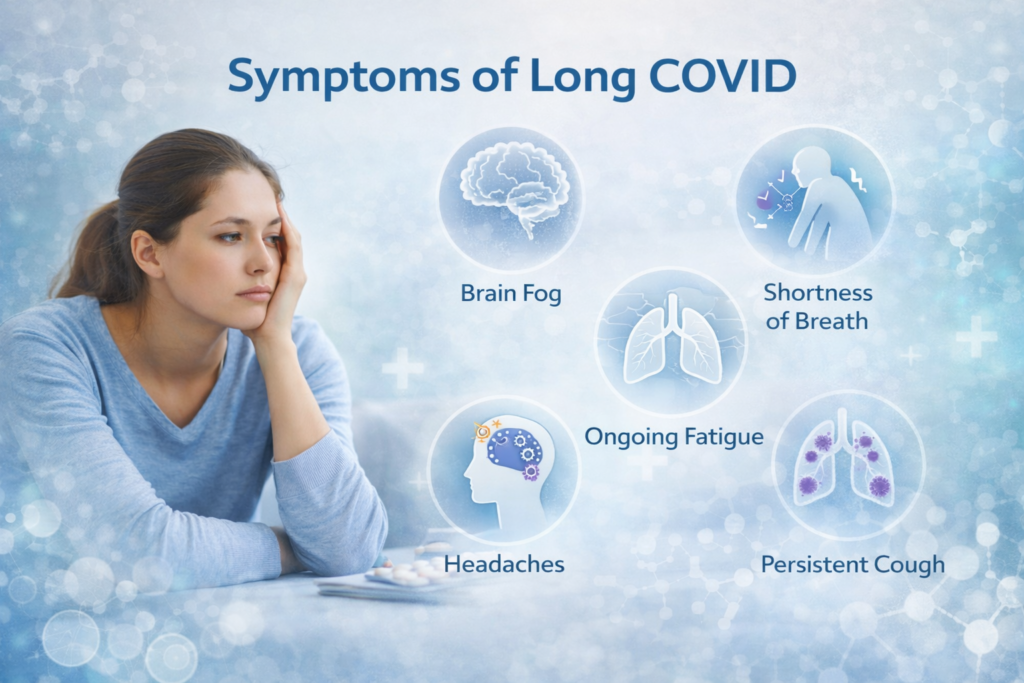
Symptoms of Long COVID
Long COVID can affect nearly every part of your body. The symptoms are diverse, often fluctuate in intensity, and can last for months or years. Understanding what symptoms to watch for can help you recognize when to seek care and communicate more effectively with healthcare providers.
This article describes the most commonly reported symptoms based on research and patient surveys. Not everyone experiences all of these symptoms, and symptom patterns vary significantly from person to person.
The Scope of Long COVID Symptoms
Patients have reported over 200 different symptoms associated with long COVID. Research has documented hundreds of biomedical findings, with many patients experiencing dozens of symptoms across multiple organ systems.
A comprehensive patient survey spanning 10 organ systems examined symptoms affecting neuropsychiatric, systemic, reproductive, cardiovascular, musculoskeletal, immunological, head-ear-eye-nose-throat, pulmonary, gastrointestinal, and dermatologic systems.
The wide range makes diagnosis challenging. Symptoms can overlap with many other conditions, and standard medical tests often come back normal.
The 12 Most Distinguishing Symptoms
Researchers at the University of Washington analyzed nearly 10,000 Americans to identify which symptoms best distinguish long COVID from other conditions. They found 12 symptoms most useful for identifying patients with long COVID:
Post-exertional malaise tops the list. This means your symptoms worsen after physical or mental effort, typically 12 to 48 hours later. Dizziness, brain fog, and gastrointestinal symptoms also ranked high. Heart palpitations, issues with sexual desire or capacity, loss of smell or taste, thirst, chronic cough, chest pain, and abnormal movements completed the core 12.
These symptoms appeared significantly more often in people with long COVID compared to those who hadn’t been infected or had recovered without lasting effects.
The Two Most Common Symptoms
Fatigue and shortness of breath are the two most frequently reported symptoms across multiple studies.
The fatigue isn’t ordinary tiredness. It doesn’t improve with rest. It can be severe enough to prevent basic activities like showering or preparing meals. Reported prevalence ranges from 13% to 87% of long COVID patients, depending on the study.
Shortness of breath affects 10% to 71% of patients. Some people feel winded after climbing a single flight of stairs they used to manage easily. Others experience difficulty breathing even at rest.
Neurological and Cognitive Symptoms
Long COVID often includes prominent neurologic and psychiatric symptoms, including difficulty with memory, concentration, and ability to accomplish everyday tasks.
Cognitive dysfunction or memory issues appear in approximately 88% of long COVID patients across all age groups. This brain fog can make it hard to find words, follow conversations, or complete work tasks that were previously routine.
Headaches, memory problems, and sleep disturbances are among the most notable neurological symptoms. Some people also experience difficulty reading, problems with vision focus, or sensitivity to light.
Frequent headaches, alterations in skin sensation, and in severe cases, delusions and paranoia have been documented, though the more extreme psychiatric symptoms are less common.
Cardiovascular Symptoms
POTS causes your heart rate to increase rapidly when you stand up from sitting or lying down. Symptoms include palpitations, chest pain, difficulty breathing, lightheadedness, and even fainting.
Chest pain or tightness affects 12% to 44% of long COVID patients. Some experience this as sharp pain, while others describe it as pressure or discomfort.
Effort intolerance, meaning reduced ability to perform physical activities you previously managed, is common in the cardiovascular system. This overlaps with general fatigue but specifically affects physical exertion capacity.
Respiratory Symptoms
Respiratory conditions occur twice as often in COVID-19 survivors as in the general population. Shortness of breath and cough are the primary respiratory complaints.
These symptoms persisted for at least 7 months in 40% and 20% of patients, respectively. Some people experience a persistent cough that doesn’t respond to typical treatments.
Dyspnea (difficulty breathing), cough, and chest pain are the respiratory outcomes most commonly seen. Despite these subjective symptoms, objective measures of lung function often appear normal on standard tests.
Prevalence studies at 6 months to 2 years suggest respiratory problems persist in 2-4% of people following infection, though this may underestimate cases where symptoms are present but mild.
Gastrointestinal Symptoms
Digestive system symptoms appear frequently in long COVID patients. These include changes in bowel habits, nausea, indigestion, and abdominal pain.
The reported incidence of gastrointestinal disorders is highly variable, but estimates suggest around 6% of people with a history of COVID-19 develop lasting digestive issues.
Less common symptoms include poor appetite, diarrhea, and general digestive discomfort. Some people report that certain foods they previously tolerated now cause problems.
Sensory Changes
Loss of smell or taste, while often temporary during acute COVID-19, can persist for months in some people with long COVID.
Anosmia (loss of smell), dysgeusia (altered taste), and related sensory problems appear in symptom lists across multiple studies. These symptoms distinguish long COVID from many other post-viral conditions.
Some people experience altered sensation in their skin or changes in how they perceive touch, temperature, or pain.
Musculoskeletal Symptoms
Muscle and joint pain affect many people with long COVID. Joint pain, muscle aches (myalgias), and general body aches are commonly reported.
The pain can be widespread or localized to specific areas. Some people describe it as similar to flu-like aches that never fully resolve.
Muscle weakness, distinct from fatigue, can make it difficult to perform tasks requiring strength or endurance. This may improve slowly over time but can persist for months.
Sleep Disturbances
Sleep issues are more common in individuals with long COVID. These include difficulty falling asleep, staying asleep, or feeling unrefreshed despite adequate sleep time.
Insomnia can worsen other symptoms, particularly fatigue and cognitive problems. The relationship works both ways—pain, breathing difficulties, or anxiety can also disrupt sleep.
Some people develop new sleep disorders after COVID-19, including changes in sleep architecture or circadian rhythm disruptions.
Autonomic Dysfunction
Dysautonomia, especially postural orthostatic tachycardia syndrome (POTS), is a common new-onset condition following COVID-19.
The autonomic nervous system controls automatic body functions like heart rate, blood pressure, digestion, and temperature regulation. When it’s not working properly, you might experience dizziness, rapid heartbeat, temperature regulation problems, or digestive issues.
Symptoms can fluctuate and affect multiple organ systems because the autonomic system coordinates so many body functions.
Mental Health Symptoms
Depression and anxiety levels increase in the first two months after COVID-19 infection. For most people, these return to normal afterwards, though other neurological symptoms like brain fog can last at least two years.
Neurological and psychiatric conditions are common, with estimates around 6% of people who had COVID-19 developing lasting mental health issues.
It’s unclear how much is due to direct viral effects on the brain versus the psychological impact of dealing with a chronic illness.
Reproductive and Hormonal Symptoms
Menstruation and the week before menstruation have been identified by patients as triggers for relapses of long COVID symptoms.
Individuals experiencing both COVID-19 and menstrual changes were more likely to experience fatigue, headache, body aches, and shortness of breath. The most common menstrual changes were irregular periods, increased premenstrual symptoms, and infrequent menstruation.
Viral persistence in penile tissue has been documented, as has increased risk of erectile dysfunction, likely resulting from endothelial dysfunction. Changes in sperm parameters have also been reported in some studies.
Dermatological Symptoms
Skin-related symptoms can include rashes, hives, or other skin changes. Hair loss (alopecia) and excessive sweating have been reported in some long COVID cases.
These symptoms are less common than respiratory or neurological issues but can be distressing when they occur.
Less Common but Serious Symptoms
These symptoms may benefit from further research attention. Just because they’re less common doesn’t mean they’re less important to those experiencing them.
How Symptoms Vary by Age
In people aged 15-19 years, fatigue, headache, dizziness, shortness of breath, chest pain, loss of smell or taste, reduced appetite, concentration difficulties, memory issues, and sleep problems were more common compared with controls of the same age.
The most common symptoms in children are persistent fever, sore throat, problems with sleep, headaches, shortness of breath, muscle weakness, fatigue, loss of smell or distorted smell, and anxiety. Most children with long COVID experience three or more symptoms.
Long COVID appears to be less common in children and adolescents than in adults, but children can still experience serious symptoms and long-term adverse health effects.
Symptom Patterns and Clusters
Research shows that symptoms share common modes of variation in their prevalence over time. Symptoms with similar time courses are distributed across multiple organ systems.
Neurological and cognitive symptoms combined with systemic symptoms tend to persist the longest. Some symptoms improve within weeks or months, while others can last for years.
Symptoms can be continuous, or they can come and go in a relapsing and remitting pattern. You might have good days and bad days, or good weeks followed by setbacks.
When Symptoms Typically Begin
Long COVID symptoms can be persistent, meaning they developed during the acute illness and never fully resolved. They can be recurrent, meaning they go away after the initial infection then return later. Or they can be new, meaning they weren’t present initially but developed weeks or months after infection.
Some people notice symptoms immediately during or right after their acute infection. Others feel recovered for weeks or months before symptoms emerge.
How Symptoms Affect Daily Life
The impact varies enormously. Some people can work with modifications or reduced hours. Others are completely unable to work or care for themselves.
Post-exertional malaise means you need to carefully manage your energy. Activities that seem minor—grocery shopping, cooking dinner, attending an appointment—can trigger symptom flares that last days or weeks.
Why Normal Test Results Don’t Rule Out Long COVID
One of the most frustrating aspects of long COVID is that standard medical tests often come back normal. Blood work, chest X-rays, EKGs, and other routine tests frequently show nothing abnormal.
This doesn’t mean symptoms aren’t real. It means that the tests we routinely use weren’t designed to detect the types of problems long COVID causes. Specialized testing can sometimes identify issues—like tilt table tests for POTS or detailed cognitive assessments for brain fog—but these aren’t part of standard care.
The Importance of Tracking Your Symptoms
If you’re experiencing possible long COVID symptoms, keep detailed records. Note when symptoms started, how severe they are, what makes them better or worse, and how they affect your daily activities.
Be specific. Instead of “tired,” note “unable to shower without resting” or “needed to lie down after 10 minutes of light activity.” This helps healthcare providers understand the actual impact on your life.
Track patterns. Do symptoms worsen after exertion? At certain times of day? In relation to your menstrual cycle? These patterns can help identify triggers and guide management strategies.
When to Seek Medical Care
You should seek medical evaluation if symptoms persist beyond a few weeks after COVID-19 infection, especially if they’re interfering with your daily activities.
Seek immediate care for severe symptoms like chest pain, difficulty breathing, severe headaches, confusion, or signs of stroke. Don’t assume these are just long COVID—they need urgent evaluation.
For ongoing but less acute symptoms, schedule an appointment with your primary care provider. Bring your symptom tracking records and be prepared to describe how symptoms affect your function, not just that they exist.